
Advanced R&D teams often create powerful innovations — flexible batteries, halogen-free chemical agents, ultra-low-cost hyperspectral cameras, humanoid robots — well before the world knows what to do with them. The science is sound. The prototype may work beautifully. But the hardest question remains.
The prototype might work. But where should this technology be applied?
Identifying unmet customer needs is not just hard; through direct questioning alone it is often impossible. Customers can only describe the world they see. They may tell you what they wish they could do, or describe pain points in broad terms. But they rarely articulate the deeper, systemic problems, or express latent needs that require a new way of thinking. That is why good needs discovery involves more than surveys and interviews. It demands observation, immersion and creativity.
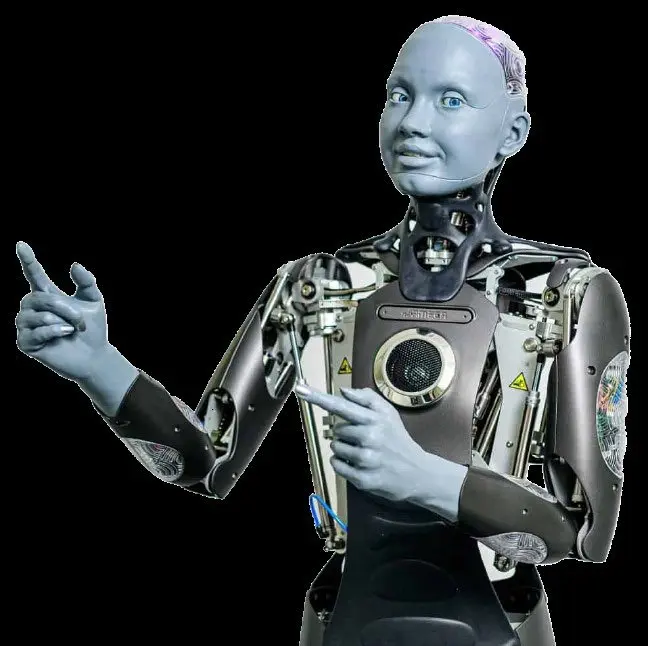
Developing your application hypothesis is one of the most difficult parts of the innovation process. Often the people closest to the technology don’t fully understand the real-world problems it could solve. At the same time, potential customers typically can’t describe what they truly need, especially when the solution lies outside the realm of what they know is possible. This disconnect is where great ideas stall.
So where do you begin?
Start by clearly defining your technology’s unique capabilities — its superpowers. Not how it works, but what it enables. Can it deliver energy across distance without wires? Function in high-heat environments? Capture data the human eye can’t perceive? These capabilities form the foundation for everything that follows.
Reframe with “How might we…”
How might we power devices in places where batteries fail? How might we monitor invisible changes in crops, buildings or water systems? How might we eliminate toxic substances where human exposure is risky? These prompts unlock imagination and shift attention from the solution to the problem space.
Bring in a cross-disciplinary team
Include not just technical staff but people from healthcare, logistics, agriculture, retail, energy, even defense. Ask them where things break down, what is frustrating, and where wires, chemicals, imaging systems or power are a bottleneck. Encourage every idea — at this stage it is about divergence, not evaluation.
Generate thirty to fifty ideas
Don’t worry yet about whether they are practical. Focus on the breadth of use cases, especially in industries or geographies where your organization doesn’t currently operate. Then organize them into clusters — remote sensing, hazard-free power, low-impact materials — which will reveal patterns and recurring themes.
When deep tech misses the mark
Even the most advanced technologies can struggle if they don’t uncover their true superpower, or fail to match it to a meaningful need. Consider the Segway. Technically impressive, with self-balancing capabilities and precision movement, it was hailed as a transportation revolution. But it never found a real-world context where its features were truly necessary: too fast for sidewalks, too slow for roads, too expensive for mass use, and solving a pain point most people didn’t have.

Google Glass is another. Its lightweight, voice-controlled, heads-up display showed great promise, but it lacked a clear value proposition for everyday users and raised privacy concerns. Despite its technical sophistication it failed to connect to a must-have use case, until years later when it found limited traction in specialized industrial settings.

Discovering your technology’s superpower is essential. Applying it in the right place is what turns potential into impact.
Then move into discovery
Once you have shortlisted three to five promising application areas, go and look. Talk to people in those domains. Watch how work is done. Create rough mock-ups or scenarios. Your goal is not to pitch the solution but to validate the need — to understand how painful the problem is, where current solutions fall short, and what success would look like in that setting.
A key insight here is that most teams rush into defining a solution, applying the tools they know, without doing the hard work of walking in the customer’s shoes. But it is that deep, observational work — watching behaviour, listening carefully, imagining what customers can’t articulate — that leads to meaningful breakthroughs.
In the end, your technology is just the starting point. Great innovations happen when teams do the unglamorous but critical work of discovering where their technology can matter most. It takes humility, patience and a willingness to explore outside your comfort zone, but the payoff is a clear path to impact.
In the next article we walk through how to filter and evaluate application ideas in a structured way, so you can move from creative exploration to focused discovery.
Get a complimentary innovation assessment
We’ll help you align your internal teams around the advance, the need, and the goal.
Let’s Connect→